
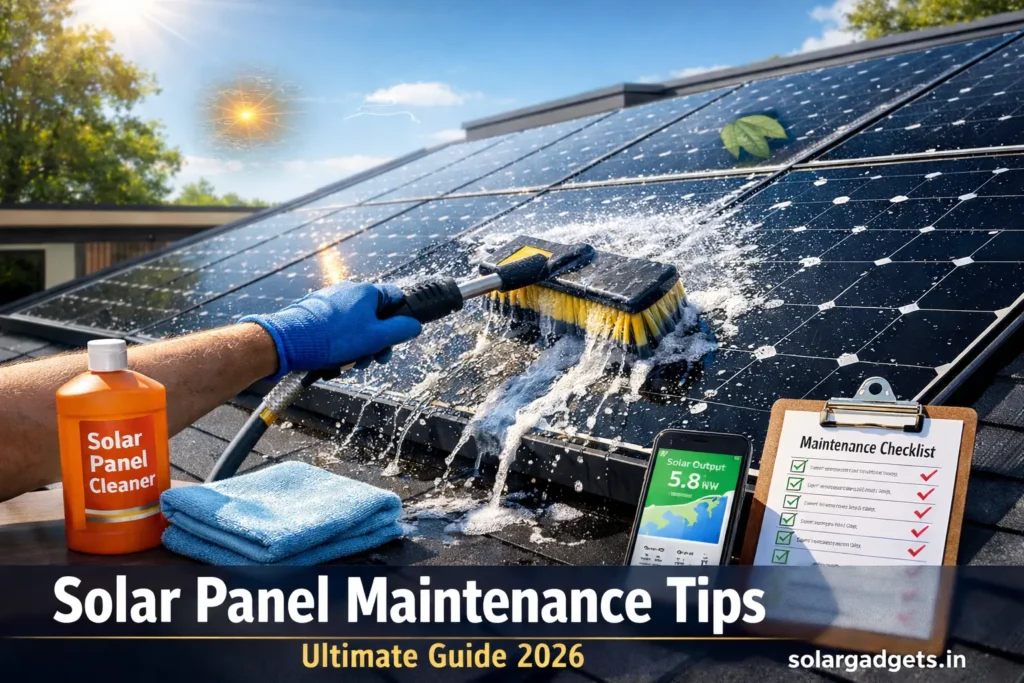
Solar panel maintenance tips are essential for maximizing energy efficiency, preventing downtime, and extending your system’s lifespan up to 30+ years. This guide covers proven solar panel cleaning methods, reveals common solar panel problems with quick fixes, and shares official best practices from trusted authorities to keep your setup performing at peak levels.
Table of Contents
Why Solar Panel Maintenance is Crucial for Efficiency
Regular solar panel maintenance boosts energy output by 20-30% by preventing dirt buildup and early failures. Neglecting it leads to reduced ROI and higher repair costs, as noted by the
U.S. Department of Energy.
Also Read: How Much Does a 5kW Rooftop Solar System Cost in 2026?
Top 7 Solar Panel Maintenance Tips for Homeowners
- Clean panels 3-6 months with soft brushes and mild soap; avoid high pressure.
- Inspect monthly for cracks, shading, or loose wires.
- Monitor inverter output via apps quarterly.
- Trim vegetation to prevent shading.
- Check mounts for corrosion annually.
- Use deionized water for streak-free cleaning.
- Schedule pro inspections yearly per NREL guidelines.
Common Solar Panel Problems and Quick Fixes
| Solar Panel Problem | Causes | Symptoms | Solutions |
| Hotspots | Shading, faulty diodes | Overheating, power drop | Thermal scan; trim shade |
| Cracks/Micro-cracks | Hail, stress | Visible lines, efficiency loss | Post-storm checks |
| Delamination | Moisture, UV | Yellowing | Seal and clean regularly |
| Inverter Failure | Corrosion | No output | Electrical pro check |
| Soiling | Dust, debris | 30% output loss | Routine rinse |
Download the comprehensive NREL PV O&M Best Practices PDF—a free, authoritative guide from the National Renewable Energy Laboratory outlining top strategies for photovoltaic operations, maintenance checklists, performance tracking, and troubleshooting to optimize your solar system’s efficiency and longevity.
Best Solar Panel Cleaning Methods Step-by-Step
- Safety First: Turn off the inverter and DC disconnect to de-energize the system before starting any cleaning.
- Rinse from Top: Use a garden hose with low-pressure nozzle to spray panels from top to bottom, loosening dirt, dust, and bird droppings.
- Gentle Detergent: Mix mild dish soap or solar-specific cleaner with water; apply using a soft-bristle brush or microfiber mop—never use abrasives.
- Scrub Lightly: Work in sections to avoid streaks, focusing on shaded or soiled areas.
- Rinse Thoroughly: Hose off all soap residue from top down to prevent mineral spots.
- Air Dry: Allow panels to dry naturally in shaded conditions; avoid wiping to prevent micro-scratches.
- Optimal Timing: Clean early morning or late afternoon when panels are cool to minimize water spotting and thermal shock.
Solar Panel Troubleshooting: When to Call Experts
Homeowners should contact professional solar technicians in these key scenarios to avoid risks and ensure warranty compliance:
- Unexplained Output Drops: If energy production falls 10-20% below expected levels despite cleaning and no shading, pros use diagnostic tools like thermal imaging to identify hidden issues.
- Electrical or Wiring Problems: Sparks, burning smells, error codes on inverters, or loose connections require certified electricians to prevent fires or system failure.
- Storm or Physical Damage: Hail impacts, fallen branches, or wind damage causing cracks/micro-cracks need immediate expert assessment for structural integrity.
- Inverter or Component Failures: Persistent faults, overheating, or no power output demand replacement by specialists familiar with your model’s specs.
- Complex Roof or Mounting Issues: Corrosion, loose racking, or vegetation overgrowth often requires ladders, drones, or heavy equipment for safe repairs.
Always follow SEIA O&M Standards for certified service providers who adhere to industry best practices. Regular pro inspections (annually) catch issues early, maximizing ROI and safety.
Solar Panel Maintenance Schedule: Tips for 25+ Year Lifespan
Implement this simple routine to ensure your solar panels deliver optimal performance for 25-40 years:
- Daily/Weekly: Monitor inverter display or app for real-time output alerts.
- Monthly: Visual checks for dirt, shading, or damage; trim nearby vegetation.
- Quarterly: Full cleaning using the step-by-step method above; inspect connections.
- Annually: Professional inspection with thermal scans and electrical tests per NREL guidelines.
- Every 5 Years: Comprehensive system audit, including inverter health and grounding.
Adhering to MNRE O&M Guidelines maximizes energy yield, minimizes downtime, and protects your investment. Track key metrics like performance ratio to stay ahead of issues.
FAQs
How often should I clean my solar panels?
Clean solar panels every 3-6 months, or more frequently in dusty areas, to maintain 20-30% higher efficiency by removing dirt and debris.
What is the best way to clean solar panels at home?
Deactivate the inverter, rinse top-down with low-pressure water, use mild soap and a soft brush, then air dry—avoid harsh chemicals or abrasives.
What are the most common solar panel problems?
Hotspots from shading, cracks from hail, soiling buildup, inverter failures, and delamination top the list, often causing 10-30% output loss.
How long do solar panels last with proper maintenance?
25-40 years, as routine care prevents degradation and optimizes performance per NREL and DOE guidelines.